
Deep Diamond Understanding and Experience
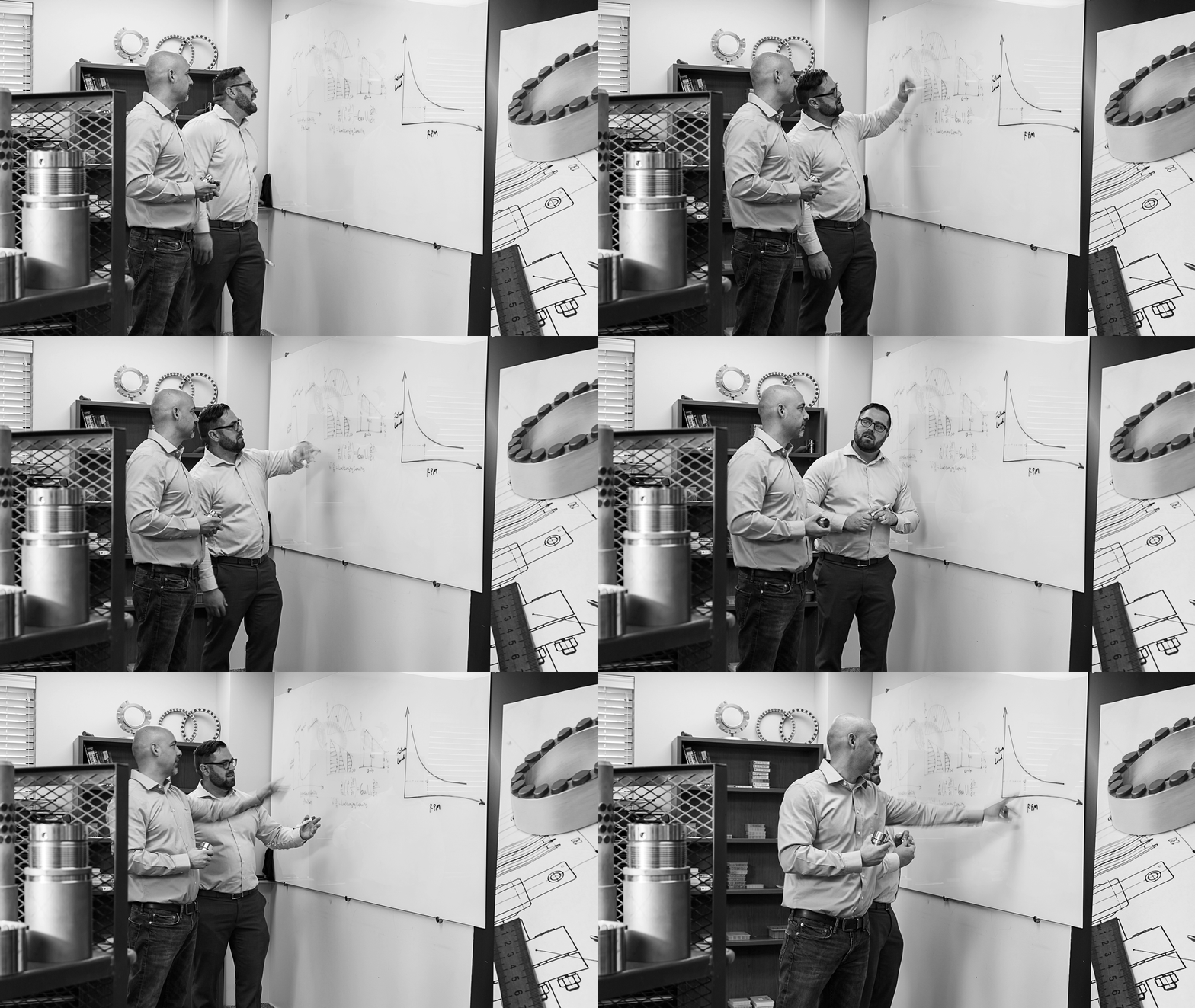 Accomplished scientists with more than 60 years of combined diamond research experience lead the US Synthetic research and development efforts. A separate team of application engineers works directly with customers to develop custom diamond solutions that make the best possible use of the latest technology. These engineers have years of experience with PDC design and working with bit companies. A staff of experienced technicians constantly evaluates and tests new products in the laboratory, so the product is tested and ready for application in the field.
All of these experienced professionals work in state-of-the-art research and testing facilities. This includes a full metallurgical lab, an advanced computer-aided design center, and a sophisticated testing lab. These facilities allow our scientists and engineers to:
- Create and optimize new cutter designs using the latest solid modeling software.
- Model and analyze the thermal and mechanical performance of PDC cutters under simulated drilling conditions using finite element analysis tools.
- Quickly build prototype cutters in a dedicated R&D environment.
- Evaluate cutters using scanning acoustic microscopy (C-SAM), optical and scanning electron microscopy, and metallurgical analysis.
- Monitor and improve cutter performance with abrasion, impact resistance, and vertical turret lathe (VTL) testing.
Bearing Test Machine
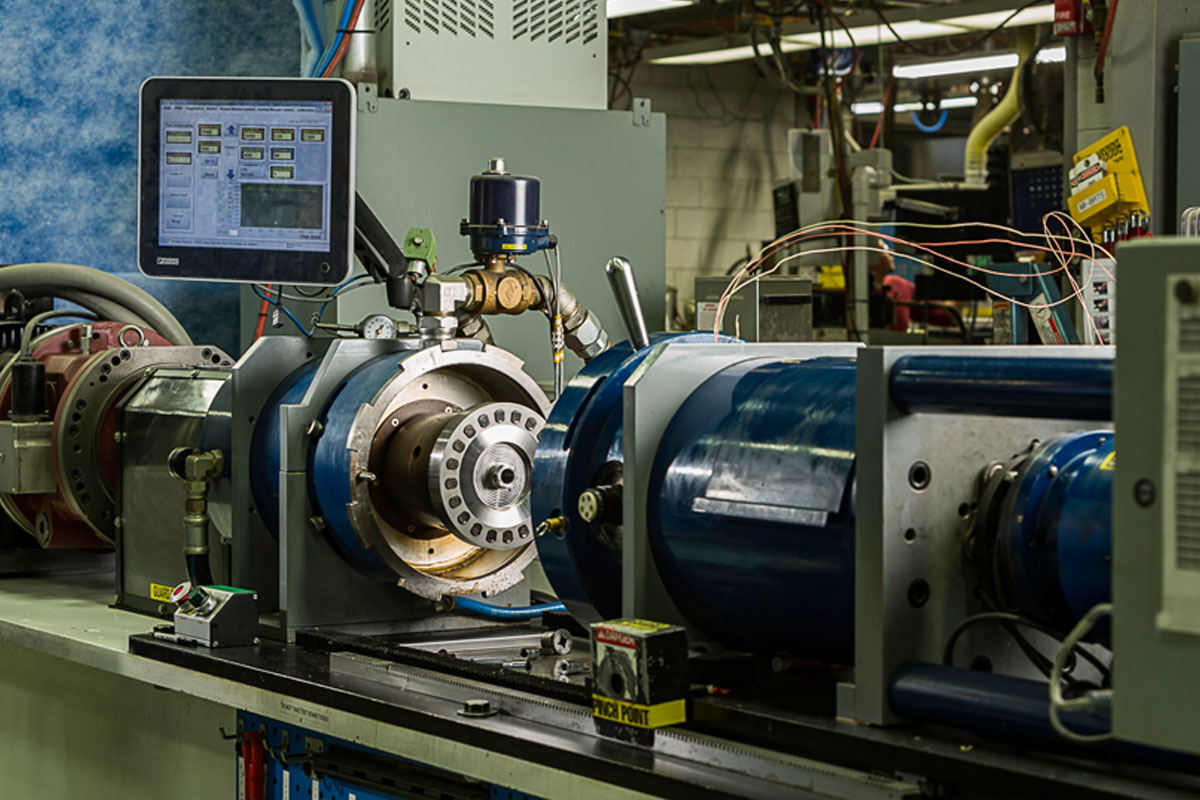 US Synthetic Bearings has commissioned a high capacity bearing test machine. This innovative machine is capable of several types of tests including wear tests (that last up to several months), capacity tests, friction tests, and fluid film tests. The results from these tests are used to improve the bearing products offered to all customers for their specific applications.
Wear Testing
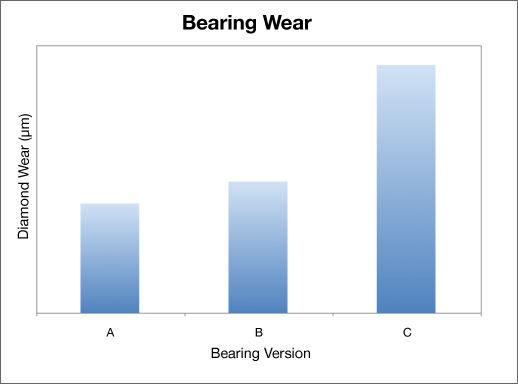 During wear testing, a high axial load is applied for extended periods of time — from hours to even months. The total diamond wear in the bearing is then measured and converted to a wear rate. Test results are then used to compare the relative wear resistance of different diamond blends, bearing insert geometries, and bearing insert configurations. The results of these wear tests help the US Synthetic Bearings engineering team design the best bearing possible for a given application. Wear test results are also used to predict bearing life in specific applications. The following are examples of wear test results:
Capacity Testing
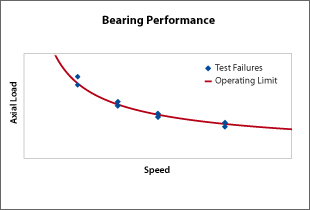 During performance testing, US Synthetic’s bearings are tested under constant speed, gradually increasing load until bearing failure occurs. Test parameters and bearing designs can be adjusted to meet the customer’s design, speed, load, and cooling flow rate. The data gathered during this testing is used to generate pressure/velocity (PV) failure curves which define the safe operating envelope for a given bearing. Test results can also be used to predict required cooling flow rate, expected heat generation, and frictional loss in customer applications.
Fluid Film and Friction Tests
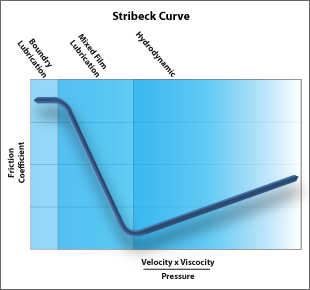 During friction testing, a constant axial load for the duration of the test, gradually increasing speed until the test is complete, is applied to all tests. Test parameters and bearing design can be adjusted to meet every customer’s design, load, and cooling flow rate requirements. The data gathered from these tests is used to generate Stribeck curves, which define the lubrication regimes (boundary, mixed film, and hydrodynamic) present at various speeds. This helps the engineering team at USS Bearings understand and predict the expected friction coefficients associated with the bearings for each given application.
Prototype Machine Shop
US Synthetic Bearings is committed to fast turnaround times on new bearing designs and bearing test results. For this reason, USS Bearings utilizes a skilled prototype machine shop dedicated to making new bearings quickly and at the highest level of quality. This enables costumers make decisions quickly and with confidence.
Analyses
In addition to laboratory testing, US Synthetic Bearings engineering staff uses finite element models and proprietary bearing design tools to help predict field performance.
High-Pressure High-Temperature Technology
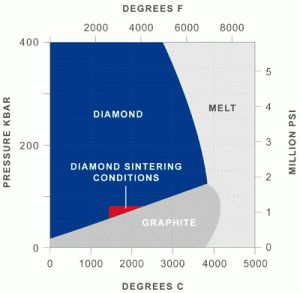
Diamond sintering requires the application of extreme heat and pressure. Typically, diamond is sintered at a temperature of around 1400°C (2550°F). At room pressure, these extreme temperatures would cause the diamond to revert to graphite. Maintaining extremely high pressure during the sintering process allows the diamond to remain in its natural form (see figure). This typically requires pressures of around 60 kbar (nearly 1,000,000 psi)—the equivalent of a 240 km (160 mile) high column of granite.
To achieve these extremely high temperatures and pressures simultaneously, US Synthetic uses proprietary cubic press technology. The cubic press consists of six large pistons, each of which is capable of supplying several thousand tons of force. Each piston pushes on a small tungsten carbide anvil, which in turn compresses a cubic pressure cell that contains the raw materials (carbide and diamond crystals). As soon as the cubic press reaches the desired pressure, electric current flows through a resistance heater embedded in the pressure cell to generate the required high temperatures. These conditions are maintained long enough to ensure complete diamond-to-diamond bonding of the individual crystals.
PDCs were first introduced decades ago as a replacement for natural diamonds. These early cutters lacked toughness, were generally limited to the softest drilling applications, and required very specialized bit designs and carefully controlled drilling parameters. Over the years, aggressive innovation and improvements to the process have steadily increased the durability, impact resistance and abrasion resistance of PDCs.
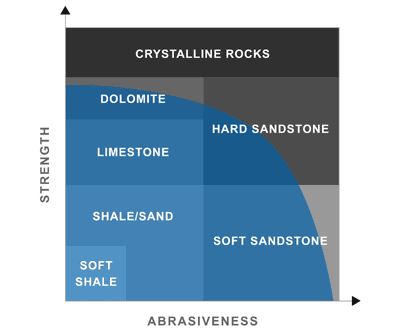
Today’s PDCs are effective in shale, limestone, and sandstone formations. Over time, the PDC-drillable zone will continue to grow and expand (see figure). For example, US Synthetic frequently cuts crystalline rocks for extended periods in a laboratory environment—and is working hard to extend these capabilities to an operating environment.
Today, PDC enhanced bits provide the fastest, most durable and most cost-effective drilling.
Performance of diamond bearings for boundary, mixed-mode and hydrodynamic lubrication regimes
Extreme operating and environmental conditions, such as high and varying load, high temperature, high or varying speed, and less than ideal lubricating fluids can cause excessive wear, damage, and even failure in conventional thrust bearings. This paper discusses the advantages of polycrystalline diamond (PCD) bearings operating in boundary, mixed-mode and hydrodynamic lubrication regimes.
Analysis of diamond segmented pads on rotating and stationary bearings in contact sliding
Polycrystalline diamond (PCD) bearings are designed for severe conditions where contaminated fluids, high and varying loads and speeds, and elevated temperatures cause failure in machine components.
Polycrystalline diamond thrust bearings for down-hole oil and gas drilling tools
Down-hole tools used for drilling oil and gas wells are subjected to harsh environments where abrasive fluids, high loads and speeds, and high temperatures can cause tool components, including thrust bearings, to quickly fail. This paper discusses the advantages that polycrystalline diamond can provide when used as a bearing material in down-hole tools.
Wear-in behavior of polycrystalline diamond thrust bearings
Polycrystalline diamond (PCD) bearings are designed for use in harsh environments, including process-fluid-lubricated applications such as those in oil and gas drilling turbines.
The development of open water-lubricated PCD thrust bearings for marine hydrokinetic energy machines
The Development of Open Water-lubricated Polycrystalline Diamond (PCD) Thrust Bearings for Use in Marine Hydrokinetic (MHK) Energy MachinesA polycrystalline diamond (PCD) bearing has been developed that will operate successfully in Marine Hydrokinetic (MHK) machine applications. PCD bearings represent a new class of bearings that have, heretofore, not been extensively studied. This work makes significant contributions … Continue reading The development of open water-lubricated PCD thrust bearings for marine hydrokinetic energy machines
Seven Steps to Reducing Failure and Cycle Time
The manufacturing team was looking for a way to reduce the time required to make the cutters. The reason for the cutter failures needed to be determined of frequency and manufacturing time were to be reduced.
The Role of Diamond Surface and Intrinsic Contaminates on Sintering of Polycrystalline Diamond Compacts (PDC)
High pressure/high-temperature sintering of polycrystalline diamond compacts (PDC) is sensitive to impurities in the diamond feedstock, both surface and intrinsic.
Effects of Design and Processing Parameters on Performance of PDC Drag Cutters for Hard-Rock Drilling
Sandia National Laboratories and U S Synthetic Corporation have jointly conducted a multifaceted, baseline experimental study to support the development of improved drag cutters for advanced drill bits.
Polycrystalline Diamond Compact (PDC) Design Methodology Utilizing Strain Energy Capacity
PDC bits have had limited success at drilling high compressive strength and abrasive rock formations. One of the limitations to hard rock drilling is the propensity of the cutters to fracture.
Understanding and controlling residual stresses in thick polycrystalline diamond cutters for enhanced durability
Residual stresses in PDC cutters arise from the difference in thermal expansion between the polycrystalline diamond layer and the supporting tungsten carbide substrate after sintering at high pressure and temperature. If not managed correctly, these stresses can significantly reduce the toughness of the cutters, especially as the diamond-layer thickness increases.